Autor: marcel

  • 4 A-List Woodworking Projects

    4 A-List Woodworking Projects

    Stop Searching: 4 A-List Woodworking Projects (And How to Get the Plans)

    You’ve got your tools. You’ve practiced your cuts. You’ve even read our Woodworking Starter guide.

    Now, the real frustration begins.

    You have the itch to build, but you’re stuck in the “what now?” phase. You start searching for “free plans” and immediately fall into a rabbit hole of low-quality blogs, confusing YouTube videos you have to pause every 3 seconds, and “free” guides that are missing critical measurements.

    We get it. Wasting a full Saturday on a confusing plan is infuriating. Wasting expensive hardwood because a cut list was wrong is costly.

    Your time and your materials are too valuable for that.

    We’ve curated 4 high-impact intermediate projects that look professional, build essential skills, and are perfect for a weekend. More importantly, we’ll show you how to get reliable plans for them so you can spend your weekend building, not searching.

    1. The Bookcase with Concealed Storage
    659_n
    Bookcase

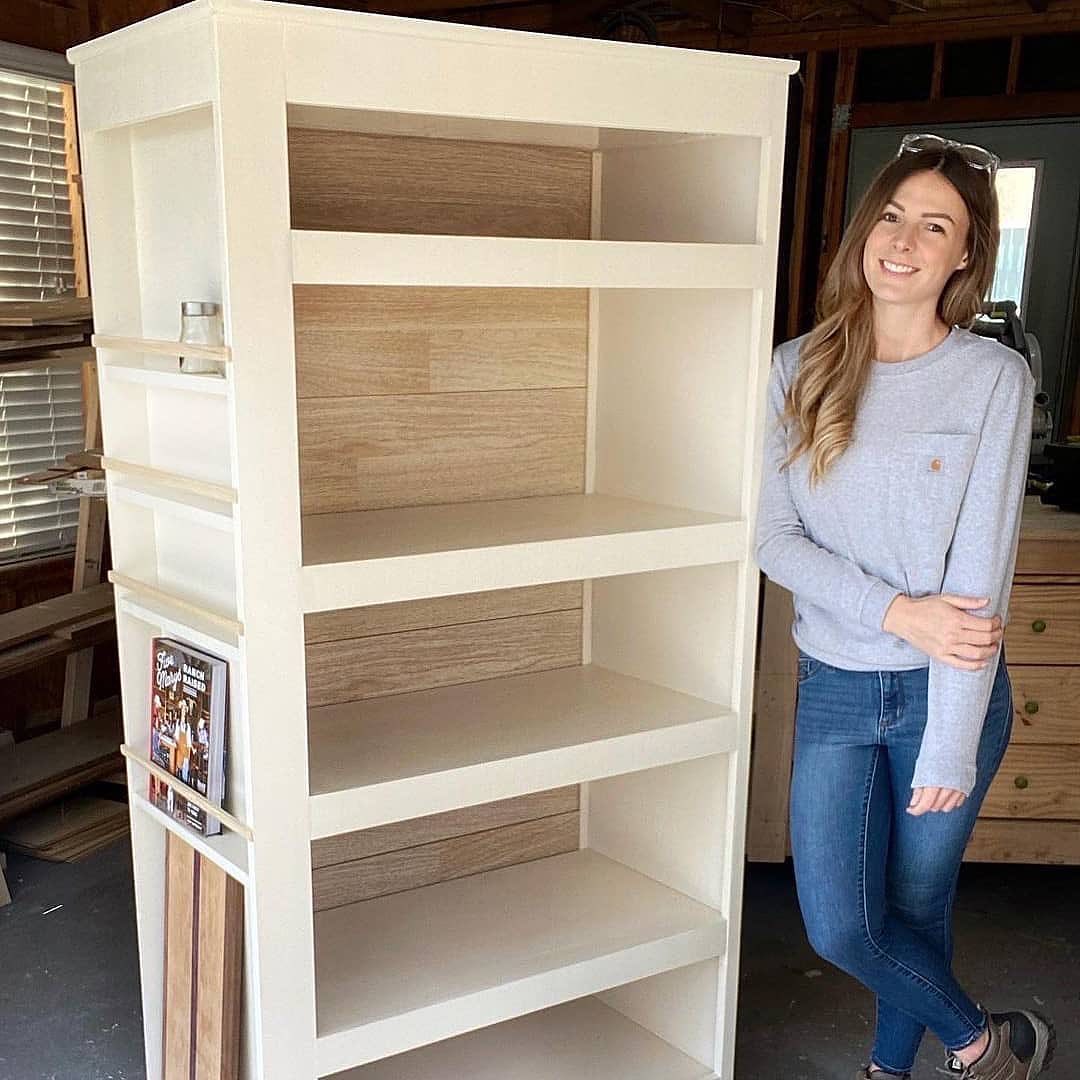
    This project is a true “statement piece” that combines high-end style with serious utility. It might look like a complex custom build, but it’s an excellent way to master large-scale assembly and finishing. You’ll learn how to build a sturdy cabinet carcass, securely install multiple fixed shelves, and add a beautiful, contrasting back panel. The real star, however, is the clever side-storage compartment—perfect for magazines or keeping small items neatly hidden away.

    2. The Classic Adirondack Chair

    A modern plywood bookshelf teaches essential skills with sheet goods and edge banding, resulting in a high-end, functional piece.
    Classic Adirondack Chair

    This is a timeless project that immediately impresses. It looks complex, but it’s a fantastic way to master angled cuts using a miter saw (or even a jigsaw with a steady hand). You’ll learn how to work with curves, assemble components at odd angles, and (most importantly) how to properly sand and finish wood for outdoor durability.

    3. The Ergonomic Laptop Riser
    Laptop-raiser
    Ergonomic Laptop Riser

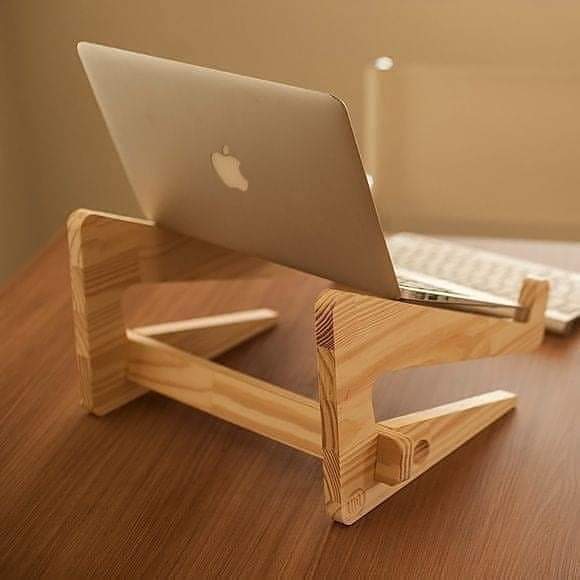
    Don’t let its simplicity fool you; this is one of the most useful projects you can build in a single afternoon. It’s a fantastic exercise in precision and efficiency. Using just a few pieces of wood, you’ll master clean, angled cuts (a miter saw is great, but a handsaw with a guide works too) and practice simple, strong assembly. The result is a stylish, ergonomic stand that improves your posture and adds a custom touch to your desk.

    4. The A-Frame Tiered Plant Stand

    26449104764
    A-Frame Tiered Plant Stand

    This stylish stand is the perfect introduction to working with angles for a functional, sturdy piece. The A-frame design is a classic for a reason: it’s strong and easy to build. This project is a fantastic way to get comfortable with your miter saw, as you’ll learn to make clean, repeatable angled cuts for the legs. You’ll also practice creating slatted surfaces, focusing on consistent spacing for that professional, finished look.

    The “Turn”: Where Do You Get These Plans?

    Feeling inspired? Good. Now, about those plans.

    You could spend the next six hours on YouTube, trying to find a video that isn’t sponsored by a tool you don’t own, all while scribbling down measurements from a guy who talks too fast.

    Or you could browse those ad-filled “free plan” sites, download a PDF, and only realize after you’ve made your first cut that the diagrams are for a different model and the materials list is flat-out wrong.

    Stop. Your time is more valuable than that. Wasting a $50 sheet of oak plywood is more expensive than any plan.

    Forget the frustration.

    The solution is having access to the internet’s single largest library of plans, all in one place.

    The Teds Woodworking collection solves this problem forever. It has over 16,000 plans—including detailed, step-by-step blueprints for projects just like these (and thousands more). No more guesswork.

    Get instant lifetime access to all 16,000 plans right now and start building with confidence today.

    Get Immediate Access to 16,000+ Plans Now!
  • Teds Woodworking Review

    Teds Woodworking Review

    finds4pro.com // Woodworking Plans Review

    Teds Woodworking Review (2025): Are 16,000 Plans Too Good To Be True?

    We dive into the massive collection to see if it’s a goldmine for woodworkers or just digital clutter.

    You’ve seen the ads. Teds Woodworking. The almost mythical offer of 16,000 woodworking plans for one price. It echoes across forums and pops up everywhere. But in a world saturated with digital products, does this massive library actually deliver value, or is it just overwhelming noise?

    As professionals focused on efficiency, we cut through the hype. We analyzed the structure, the potential pitfalls, and the real-world utility of this collection for both aspiring and experienced woodworkers.


    Deconstructing the Offer

    Teds Woodworking isn’t a single software or book. It’s presented as a comprehensive digital archive containing downloadable plans curated by Ted McGrath. The core components claimed are:

    • Step-by-step blueprints with detailed instructions.
    • Complete material and cutting lists for cost estimation and efficiency.
    • Multiple schematics and angled views for clarity.
    • Projects spanning beginner tutorials to complex furniture designs.
    • An exhaustive range of categories: outdoor structures, furniture, jigs, crafts, toys, and more.
    • Bonus resources like a DWG/CAD plan viewer and supplementary guides.

    The central value proposition: lifetime access to a plan for virtually any woodworking project imaginable.

    The Core Analysis: Value vs. Volume

    A collection this large inevitably presents both significant advantages and potential drawbacks. Here’s our breakdown:

    Potential Advantages

    • Unrivaled Scope: The sheer breadth of project types is the most significant draw. From simple boxes to intricate cabinets, the variety is vast.
    • Skill Level Spectrum: Offers projects suitable for absolute beginners and challenges for more seasoned woodworkers.
    • Cost Efficiency (Potential): If you intend to build numerous projects, the one-time fee is substantially lower than purchasing individual plans over time.
    • Time-Saving Elements: Included material/cut lists streamline project preparation significantly.
    • Bonus Materials: Added guides and software viewers enhance the package’s utility.

    Points of Caution

    • Navigation & Organization: Managing 16,000 files requires effort. Finding a specific plan quickly might be cumbersome without user organization.

    Ideal User Profile

    Based on our analysis, Teds Woodworking appears most beneficial for:

    • Hobbyists (All Levels): Especially those who enjoy variety and want a vast library to explore without recurring costs.
    • DIY Home Improvers: Individuals looking for plans for practical projects like sheds, decks, planters, and basic furniture.
    • Woodworkers Seeking Ideas: The collection can serve as a substantial source of inspiration.
    • Budget-Conscious Builders (Long-Term): If the volume aligns with long-term building plans, the cost per plan is minimal.

    It might be less suitable for those needing only a few highly specialized, architect-grade plans or users who demand perfect, immediate organization out of the box.

    finds4pro Verdict: A Calculated Investment

    Teds Woodworking presents a compelling equation: massive volume vs. required user effort. The value proposition is undeniably strong purely based on the quantity of plans offered for a single price.

    If you approach it as acquiring a vast, slightly unorganized digital library brimming with potential projects, the investment can be easily justified. Even utilizing a small percentage of the plans for successful builds makes the cost-per-plan exceptionally low. The variety caters well to the exploratory nature of hobbyist woodworking.

    Recommendation: For the dedicated hobbyist or DIYer looking for an extensive, diverse plan resource and willing to manage the digital assets, Teds Woodworking offers significant potential value. If seamless organization and uniformly modern plans are top priorities, a more curated (and likely more expensive) source might be preferable.

    Access the 16,000 Plan Library?

    Explore thousands of projects, from beginner crafts to complex furniture. Includes detailed instructions, lists, and bonuses.

  • Woodworking Starter Guide

    Woodworking Starter Guide

    finds4pro.com // Woodworking Starter Guide

    So You Wanna Be a Woodworker? Don’t Get Screwed Buying Tools.

    Your no-BS guide to essential gear vs. expensive junk you DON’T need (yet).

    Alright, let’s cut the crap. Woodworking looks cool on Instagram, all satisfying shavings and perfect joints. But diving in unprepared is a fast track to wasted cash and maybe losing a finger. Before you drop a grand on shiny machines, let’s talk about what *actually* matters when you’re starting out.

    Rule Zero: Don’t Be an Idiot (Safety Gear)

    Listen up: Woodworking tools are designed to cut things. They don’t care if it’s wood or your hand. Skip safety gear, and you’re gambling with stuff you can’t get back. This isn’t optional.

    Forget fancy jigs for now. Your first, non-negotiable buys are:

    • Eye Protection: Seriously. Get proper safety glasses, not your sunglasses. Wood chips fly.
    • Hearing Protection: Power tools scream. Earmuffs or plugs. Tinnitus isn’t a cool hobby.
    • Dust Mask/Respirator: Wood dust = lung garbage. At minimum, N95 masks for sanding/MDF. A proper respirator is better.

    Also, wear sturdy shoes, ditch the baggy hoodie strings, and for god’s sake, **read the damn manuals** before you plug anything in. A clean shop is a safe shop – stop tripping over offcuts.

    The Real Foundation: Hand Tools You Actually Need

    Yeah, power tools are faster. But hand tools teach you how wood *feels*, how grain works. Skip this, and you’ll always be just a machine operator. Get these first:

    The Must-Haves:

    A Bevel Gauge (for angles) and a basic Hand Plane (like a No. 4) are great additions once you’ve got the hang of the absolute essentials.

    Power Tools: Hype vs. Help for Beginners

    Okay, the noisy stuff. You don’t need a $3000 table saw on day one. Be smart, buy smart.

    • Good Measure Tape: Accuracy is everything. Get a decent 16ft/5m or 25ft/8m one.
    • Combination Square: Your best friend for marking 90/45 degrees and checking square.
    • Marking Gauge: For layout lines parallel to an edge. Key for basic joinery.
    • Decent Chisels (Set of 3-4): Get them sharp and learn to *keep* them sharp. 1/4″, 1/2″, 3/4″ is a good start.
    • Sharpening Stone: See above. Dull chisels are useless and dangerous.
    • Handsaw (Backsaw Recommended): Learn to make a straight cut by hand. It’s fundamental.
    • Clamps (More than you think): Start with a few quick-release clamps and maybe two longer bar clamps for glue-ups. You’ll buy more. Trust me.

    Green Light: Power Tools Worth Buying Early

    • Cordless Drill/Driver: The absolute workhorse. Drilling holes, driving screws. Get a reputable 18V+ model with two batteries. Don’t cheap out here.
    • Orbital Sander: Sanding by hand sucks. A random orbital sander saves hours and gives a better finish.
    • Jigsaw: Good for curves. Not essential for *everything*, but useful early on for specific shapes.
    • Circular Saw: Your first *real* cutting machine. Great for breaking down sheet goods (plywood/MDF) and straight cuts (with a guide). **Learn the safety rules. Seriously.** Kickback is real.

    Red Light: Power Tools to SKIP (For Now)

    • Table Saw:** The beast. Amazing, but expensive, takes space, and demands serious respect/training. You can do *a lot* with a circular saw and guides first. **Wait on this.**
    • Miter Saw:** Great for accurate crosscuts and angles, but a circular saw or even a handsaw can handle basic needs initially. Useful, but not Day 1 essential unless you *only* plan on cutting boards to length.
    • Router:** Super versatile… eventually. But learning requires practice and bits are another cost. Master basic cuts first.
    • Fancy Joinery Machines (Biscuit Joiner, Domino): Absolutely not. Learn basic wood joints first. These are expensive shortcuts for later.
    • Thickness Planer / Jointer:** For milling rough lumber. You’re likely starting with dimensioned wood from the store. Wait until you actually *need* to flatten rough boards.

    The key is buying tools that solve immediate problems and build foundational skills, not just the ones that look impressive.

    Brain Power > Horsepower: Learn Your Craft

    Tools don’t make the woodworker. Knowledge does. Spend time on this:

    • Understand Wood: Grain direction, wood movement, different species. It matters.
    • Basic Joinery: Learn how to connect pieces securely (butt joints, lap joints).
    • Plan Before Cutting: Sketch it out. Make a cut list. Measure twice, cut once isn’t a joke.
    • Learn from Others: Ted’s Woodworking Plans